
What a Skipped Fall Check-Up Actually Costs You
Put off garage door maintenance this fall and the bill usually comes due in January, at the worst possible moment: a 6 a.m. commute, single-digit wind chill, and a door that won't budge. A spring that was already fatigued from a summer of humidity snaps the first time it's asked to lift a door stiffened by cold grease. An opener that's been straining against a misaligned track for months finally burns out its motor. A weatherstrip that cracked in October lets snowmelt and road salt drip onto a steel panel all winter, and by spring you're looking at rust bubbling through the paint instead of a simple seal replacement. None of this is dramatic until it is, and by then you're paying emergency rates instead of routine ones.
The good news is that most of what causes winter garage door failures is predictable, and most of it is cheap to head off right now while temperatures are still mild enough to work outside comfortably.
Why This Stretch of Illinois Is Hard on Garage Doors
Palos Park and the surrounding southwest suburbs get genuine seasonal extremes: humid summers that swell wood trim and gum up lubricant, followed by winters with real ice, road salt, and temperature swings that can run 40 degrees in a single week. That swing matters more than the cold alone. Metal springs, tracks, and hinges contract in the cold, which changes tension and tolerances throughout the whole system. A door that rolled smoothly in September can bind, grind, or hang unevenly in December simply because the hardware is now operating at a different temperature than it was adjusted for.
Add in de-icing salt tracked in on tires and boots, plus slush that collects at the base of the door, and you've got a recipe for corrosion at exactly the spots - bottom brackets, rollers, the bottom seal - that are hardest to inspect once they're caked in grime.
A Practical Pre-Winter Checklist
1. Replace the weatherstripping if it's cracked or flattened
Run your hand along the bottom seal and the side weatherstripping. If it's stiff, cracked, or compressed flat, it's no longer blocking wind, meltwater, or mice. Replacement strips are inexpensive and a reasonably handy homeowner can swap them in under an hour.
2. Lubricate hinges, rollers, and tracks - but use the right product
Household oil (WD-40 included) attracts dust and gums up in cold weather. Use a silicone-based or lithium garage-door-specific lubricant on the hinges, roller bearings, and the track's moving parts, not the track surface itself. Do this before the first hard freeze; cold grease is part of why doors feel sluggish on the coldest mornings.
3. Check every bolt, hinge, and bracket
Vibration loosens hardware over a full season of use. Walk the door with a wrench and snug up anything that's wiggling, especially the roller brackets and the hinges between panels. Loose hardware under winter load is a common cause of a door jumping its track.
4. Test the balance
Disconnect the opener (pull the release cord) and lift the door halfway by hand. It should stay put. If it drifts down or shoots up, the spring tension is off. This is also the test that can reveal a spring that's close to failing - don't ignore a door that feels noticeably heavier than it used to.
5. Inspect springs for wear, not just function
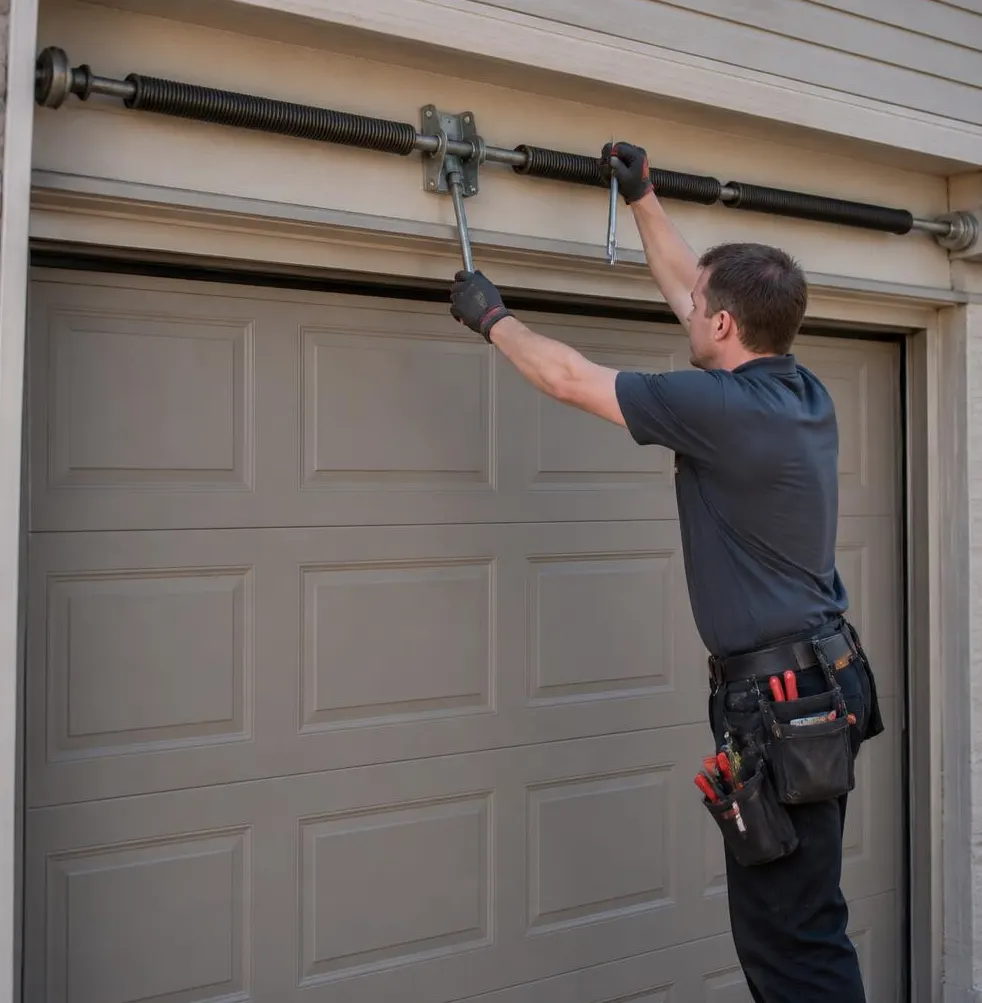
Look for gaps between coils, rust, or visible stretching. Torsion springs are rated for a certain number of cycles and tend to fail without warning, and cold weather is when that failure is most likely because the metal is less forgiving under tension. If a spring looks worn, fall is the right time to replace it, not after it's already snapped and trapped the door down.
6. Check the opener's force settings and battery backup
Openers with a battery backup should be tested before winter storms knock out power - that's also tornado and severe-storm season's cousin problem the rest of the year, so it's worth keeping that battery healthy regardless. If the door reverses unexpectedly or struggles to close fully, the force or limit settings likely need adjustment before cold weather adds more resistance.
7. Clear and protect the photo-eye sensors
Once snow starts, these sensors near the bottom of the track collect ice and road-salt spray from passing plows and tires. A foggy or ice-coated sensor will stop the door from closing at all. A quick wipe-down after storms prevents a lot of false alarms.
8. Look at insulation if the garage is attached or used as workspace
An uninsulated steel door loses heat fast and can let an attached garage swing well below freezing, which stresses pipes and makes the space useless for winter projects. Insulated garage door panels or an add-on kit are worth considering if you haven't upgraded in a while.
When to Call Palos Park Garage Door
If the balance test fails, if a spring shows visible wear, or if the door is grinding, hesitating, or reversing on its own, it's time to get a technician out rather than keep adjusting things yourself - torsion springs in particular are under heavy tension and not safe to handle without the right tools. Palos Park Garage Door handles spring replacement, full garage door maintenance tune-ups, and opener repair for homeowners throughout Palos Park, Orland Park, Tinley Park, Homer Glen, and the surrounding area, and we also run emergency garage door service for the mornings when a door won't open and you can't wait for a scheduled slot.
If you're in Palos Park, IL and want your garage door checked before the cold really sets in, call Palos Park Garage Door to schedule a pre-winter inspection.